
How Many Cylinders Are Too Many?
This article has been prepared and published by GTD Diving Equipment Trading LLC as part of our technical diving resources, providing practical information for divers, instructors, and technical diving professionals.
Would you like to keep a copy of this article for your own reference?
The same article is available as a downloadable PDF that you can save for future reference.
Why do you put so many cylinders on your students?
It is a question I have heard many times over the years. Sometimes it comes from genuine curiosity. Sometimes from a diver who has never experienced multi-cylinder sidemount. And occasionally, it comes from someone who simply does not see the point.
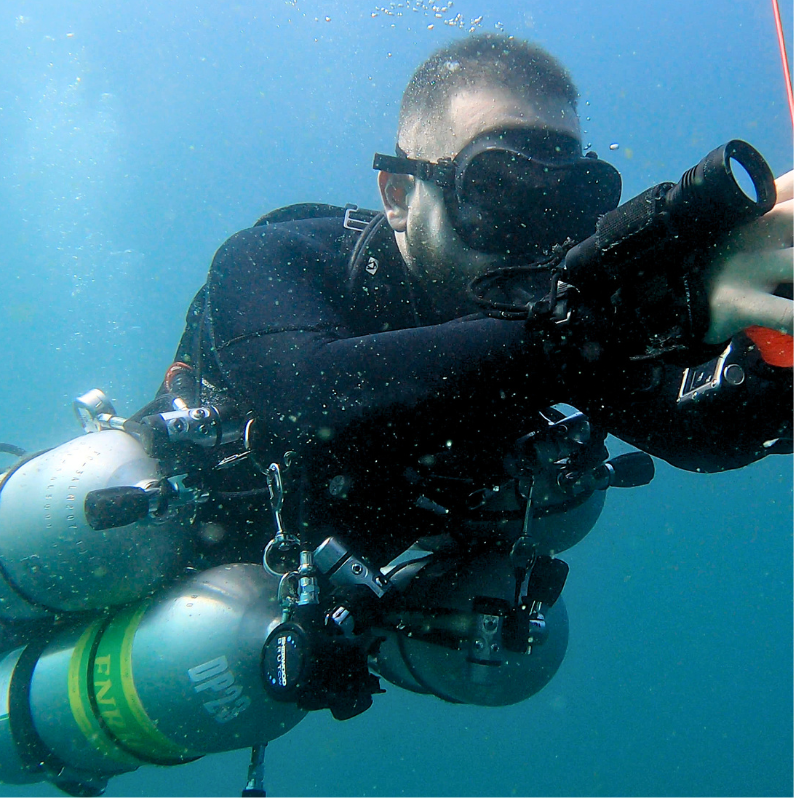
Why three cylinders? Why four, five or six? And if some of them are not even going to be used, why carry them at all? These are fair questions. But after years of teaching both recreational and technical sidemount, I believe the more important question is not how many cylinders a diver should carry during training. The better question is: What is the diver learning by managing them? That question leads directly to the real purpose of technical sidemount training.
Sidemount Is a Configuration, Not a Level of Diving
Sidemount itself is a configuration. It does not define the type of diving being performed. A diver can use sidemount for recreational diving, cave diving, wreck diving, deep diving, decompression diving or complex multi-gas technical diving.
The objectives of the dive, gas strategy, environment, decompression requirements, equipment configuration and skill set determine what kind of diving is actually being performed. Putting two cylinders on the sides of a diver does not automatically make the dive technical, and carrying more cylinders does not automatically make someone a better technical diver. The real issue is whether the diver can manage the configuration effectively when the complexity of the dive increases. That is where technical sidemount really begins
Why I Recommend Sidemount Fundamentals First
Not every training agency requires recreational sidemount as a prerequisite for technical sidemount. There is nothing inherently wrong with that. Minimum agency prerequisites and an instructor's recommended training progression are two different things.
Based on my own experience, however, I strongly recommend that divers become comfortable with the fundamentals of sidemount before moving into technical sidemount. I do not force students to follow this progression, but I explain why I recommend it. In my experience, once divers understand the reasoning, most of them agree. The reason is simple.
A recreational sidemount course gives the diver time to learn the configuration itself without simultaneously dealing with the much greater workload of technical diving. The diver can focus on equipment configuration, cylinder positioning and attachment, regulator routing, valve access, buoyancy and trim, propulsion, basic gas management, regulator switching and sidemount-specific procedures.Just as importantly, the diver has time to make mistakes, correct them and repeat the skills until the configuration becomes familiar. That familiarity is extremely valuable.
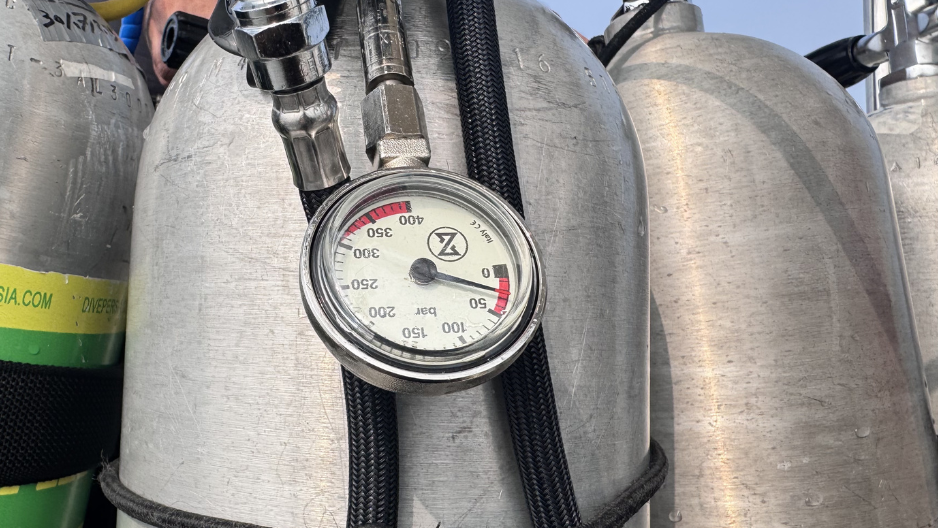
When Everything Is Learned at Once
Imagine a diver entering technical sidemount without first developing a solid foundation in sidemount.Now the diver has to learn the equipment configuration, cylinder positioning, trim, regulator management, multiple-cylinder handling, gas management, gas switching, stage and decompression cylinder handling, technical procedures and contingency skills at the same time. There is only so much mental bandwidth available during a training dive. When too many new skills are introduced simultaneously, something inevitably suffers. The technical sidemount course can end up spending much of its time teaching the diver how to become comfortable in sidemount instead of developing the skills that actually make the diving technical.
In other words: A technical sidemount course can unintentionally become an introduction to sidemount instead of a progression beyond it.
That is the main reason I prefer the two-step progression.
Where Technical Sidemount Really Begins
Once the basic configuration becomes familiar, the nature of the training changes.
Technical diving introduces additional demands: more gas, longer bottom times, decompression obligations, multiple breathing gases, stage and decompression cylinders, gas switching, more complex equipment management and a greater overall workload.
This is where sidemount becomes particularly interesting. In a conventional backmount technical configuration, the primary cylinders are secured behind the diver and stage or decompression cylinders are added to that system. Sidemount works differently. The primary cylinders are already positioned beside the diver, which means cylinder management is not something simply added later.
In fact, cylinder management is part of the system itself.
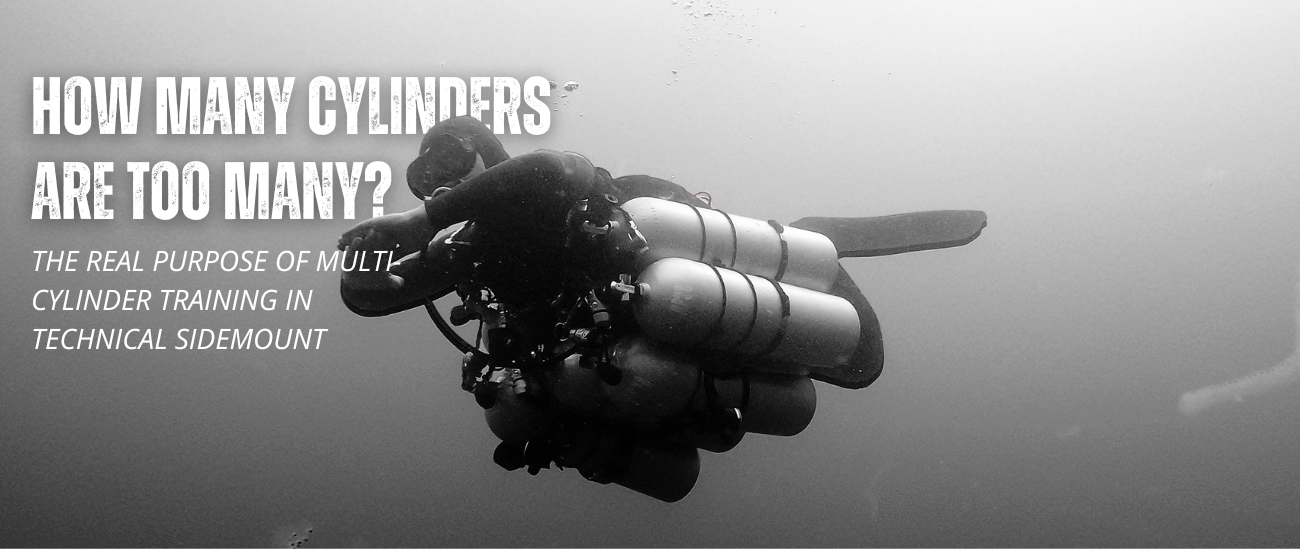
Every additional cylinder affects how the diver interacts with the configuration. Its position matters. Its effect on trim matters. Its attachment points matter. Its regulator routing matters. Gas identification and order of use matter. As the number of cylinders increases, all of these considerations become increasingly important.
More Cylinders Are Not the Goal
This is where an important distinction needs to be made. Technical sidemount is not about attaching as many cylinders as possible to a diver. There is nothing inherently impressive about six cylinders. Six cylinders do not make someone technical, experienced or a better diver.
What matters is what the diver can do with them. Can the diver maintain trim and buoyancy? Can they keep the cylinders correctly positioned? Can they access the correct regulator? Can they identify and use the correct gas? Can they handle a cylinder while maintaining position? Can they manage the configuration while maintaining communication and situational awareness?
The challenge is not carrying more cylinders. The challenge is managing more complexity.
That is why I use higher cylinder counts during training when appropriate. Not because I expect the diver to use that exact configuration on every future dive, but because I want the diver to understand what happens when the configuration becomes more complex.
Why Train With Three, Four, Five or Six Cylinders?
The answer is not that a technical sidemount diver should always dive with six cylinders. The actual number depends on the requirements of the dive: depth, bottom time, gas consumption, decompression obligation, environment, penetration, bailout requirements, gas strategy, cylinder capacity and the objectives of the dive.
There is no magic number. Two cylinders may be appropriate for one dive, three for another, and four or more for something significantly more demanding.
The configuration should serve the dive. The dive should never be built simply to justify the configuration.
The purpose of training with multiple cylinders is to develop the ability to manage a more complex configuration. A diver may never need six cylinders on a particular real dive. But if the diver has already experienced the workload created by six, managing three or four in a real technical environment may no longer feel completely unfamiliar.
That is the value of progressive training.
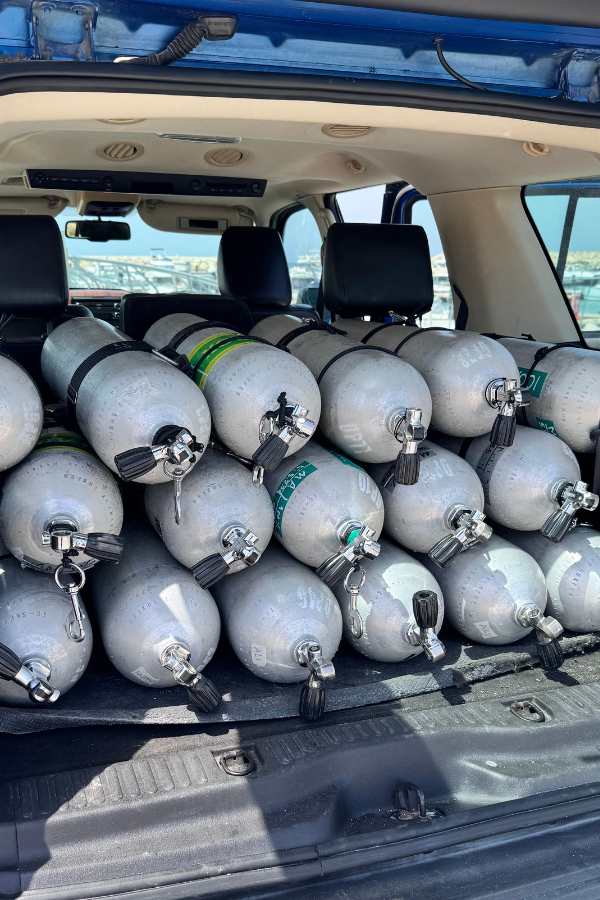
Why Train With Cylinders That May Not Be Used?
Because the skill being trained is not necessarily the gas inside the cylinder. Sometimes the objective is the management of the equipment and the workload created by it.A diver may carry several cylinders to practice attaching and removing them, maintaining correct positioning, maintaining trim while handling them, regulator selection and switching, gas identification, SPG management, cylinder rotation and stage or decompression cylinder handling.
These are practical skills, and they become increasingly important as the dive becomes more complex.The first time a diver has to manage a complex configuration should not be the first time they have ever experienced it. Training is where we deliberately create controlled situations that allow a diver to develop capabilities before those capabilities are needed in the real world.
We practice emergency procedures even though we hope never to need them. The same principle applies here.
A diver may never need to remove a particular cylinder during a real dive, but developing the ability to do so still has value.
But Why Do It on Air?
This is another question that deserves a proper answer. The gas used during a particular training exercise and the skill being trained are not always the same thing. If the objective is cylinder handling, attachment, positioning, regulator management, equipment awareness or workload management in an appropriate training environment and depth, the cylinders do not necessarily need to contain different gases simply to make the exercise useful.
There is, however, an important distinction.
Practicing multiple-cylinder handling on air is not the same as practicing a complete multi-gas decompression dive.
When the objective is gas switching and decompression procedures, those procedures must obviously be trained appropriately. But when the objective is learning how to physically and mentally manage a complex sidemount configuration, the gas itself may not be the primary learning objective. The skill is.
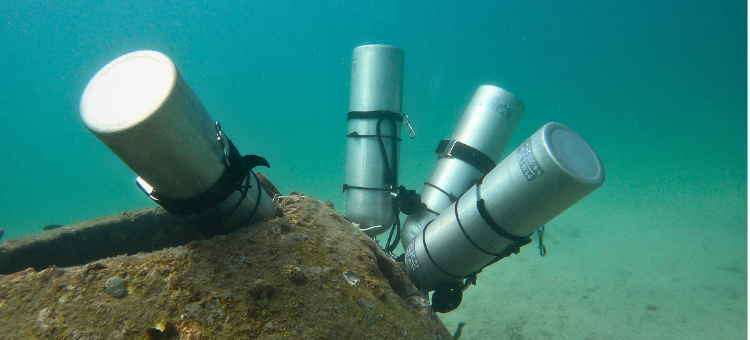
Technical Sidemount vs. Backmount Technical Diving
The difference becomes particularly important in technical diving. In a conventional backmount technical configuration, the primary gas supply is secured behind the diver. Stage and decompression cylinders are added to that system,
but the primary cylinders remain relatively fixed in relation to the diver. In sidemount, the cylinders themselves are part of the diver's active equipment-management system. They may need to be repositioned, rotated, removed, clipped, staged or brought back into position. Their location directly affects trim and access, and their regulators and SPGs are part of the diver's immediate working environment.
As the number of cylinders increases, the diver is therefore not simply carrying additional gas. The diver is managing an increasingly complex system. This is why technical sidemount cannot simply be treated as backmount technical diving with the cylinders moved from the back to the sides. The configuration changes the way the diver interacts with the equipment, and that changes what needs to be trained.
From Overload to Automaticity
There is also a mental component that is easy to underestimate. During the first few dives, a student may consciously think about almost every action: Where is this cylinder? Which regulator do I need? Where is the SPG? Which cylinder should I move? Is my trim still correct? What happens next?
When several cylinders are added, the number of things competing for the diver's attention increases. This is why a configuration that looks perfectly manageable on the surface can feel surprisingly demanding underwater. A student may attach a cylinder incorrectly, select the wrong regulator, lose trim while handling equipment, forget a sequence or simply become mentally overloaded. Sometimes the student may even wonder whether they are capable of doing it.
This is particularly noticeable when environmental conditions are less than ideal.
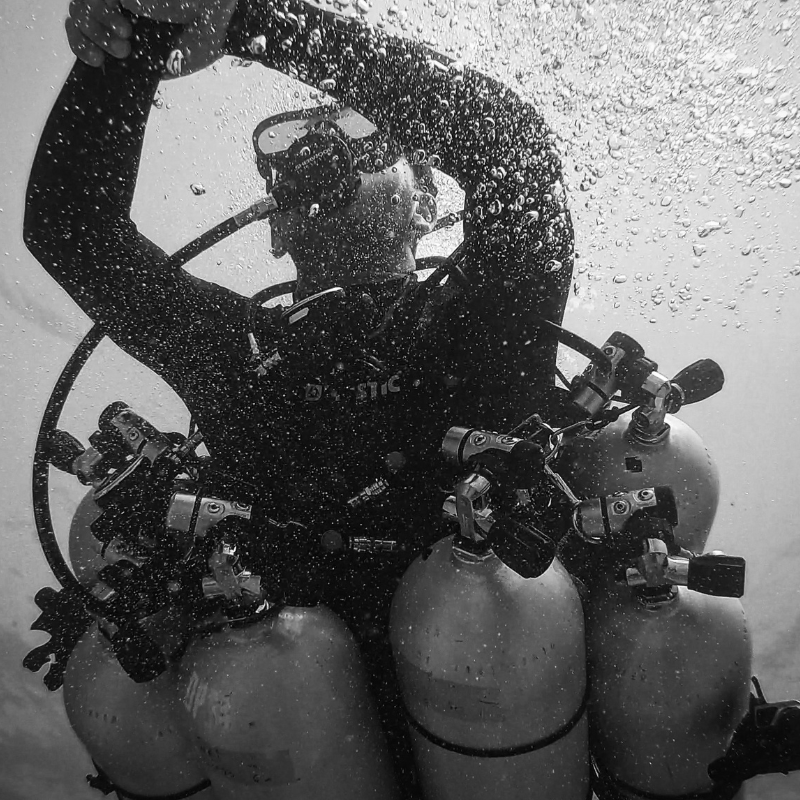
The first few dives can genuinely be difficult, and some skills may need to be repeated many times.But then something begins to change.After enough repetition, “Where is that cylinder?” becomes, “I know exactly where it is.” Then, “I can reach it without looking.” Eventually, the equipment requires less conscious attention.
Exposure leads to repetition. Repetition leads to adaptation. Adaptation leads to integration. Integration leads to competence.
The objective is not to eliminate complexity. It is to make the diver capable of managing it.
The Ultimate Goal: Make the Equipment Disappear
There is a point in skill development where something very useful happens.
The diver stops thinking about the equipment—not because the equipment has become less important, but because the diver has become more competent at managing it.A skilled sidemount diver should not constantly be thinking, “Where is cylinder number three?” The diver should simply know. The objective is for equipment management to consume less conscious attention. That reduction in cognitive workload becomes extremely valuable when the actual dive becomes demanding.
The diver can then dedicate more attention to the environment, the team, navigation, gas strategy, decompression, the task itself and contingencies. That is where equipment familiarity becomes a genuine performance advantage.
Minimum Standards vs. Effective Instructional Progression
here is a difference between asking,
“What is the minimum prerequisite required to enter this course?” and asking, “What progression gives this diver the best opportunity to succeed?”
Training agencies establish minimum standards for good reasons, and those standards matter. But an instructor's responsibility does not necessarily end at the minimum requirement.
An experienced instructor may decide that a student will benefit from additional preparation before progressing into a more complex course. That is not necessarily adding an unnecessary barrier. It can simply be good instructional judgment. In my own teaching, I have found that establishing a solid foundation in recreational sidemount before moving into technical sidemount allows the technical course to focus on what actually makes technical sidemount demanding. The objective is not to create barriers. It is to make better use of the training time available.
Training Beyond Comfort
Technical diving is an environment where poor preparation can eventually have serious consequences. That does not mean training should be unnecessarily dangerous.It means training should progressively develop the skills required to manage increasing complexity.
If we only train the configuration that feels comfortable, we may become very good at being comfortable. But comfort and capability are not the same thing. Good technical training should progressively expose the diver to increased workload while maintaining appropriate control, supervision and safety. Eventually, something that initially felt overwhelming becomes routine.
That is the point.
A Note for Instructors
This is not an argument that every technical sidemount course should look exactly the same.
Different instructors have different teaching styles. Different agencies have different standards. Different environments require different approaches, and different students have different levels of experience. .The point is not that there is only one correct way to teach technical sidemount. The point is that there should be a clear reason behind the training.
If a student is asked to carry five or six cylinders, the instructor should be able to explain what capability that exercise is developing. If the student is asked to perform a particular drill, there should be a reason for it. And if a configuration is deliberately made more complex, the complexity should serve a training objective.
That is what separates meaningful training from simply adding equipment.
The Real Meaning of Technical Sidemount