

What is Technical Diving?
You might have come across divers at a dive center or on a dive boat, equipped with specialized scuba gear, discussing concepts such as deco stops, mixed gases, gradient factors, and deco cylinders. These small groups of divers often carry an abundance of equipment and cylinders, taking up a significant portion of the boat deck.
Yes! These guys are technical divers!
Technical diving is a variant of scuba diving that surpasses the depth, duration, and various constraints of recreational diving. At its core, technical diving involves encountering a ceiling beyond which a diver cannot ascend directly to the surface at any point during the dive.
TDI categorizes a technical dive as any dive that encompasses decompression, supplementary cylinders, alternative breathing gases, rebreathers, or overhead environments like wrecks, caves, or mines. This delineation doesn’t heavily emphasize the separation between “recreational” and “technical” diving, as both forms of diving are recreational in nature and necessitate comparable equipment.
The overarching definition of technical diving involves encountering a ceiling that prevents a diver from ascending to the surface at any point during the dive.
What’s The Difference Between Tech and Recreational Diving?
Since you can’t ascend directly to the surface as you do in recreational diving, you need to know how much gas you use and make sure you have enough gas to complete the whole dive with a reserve gas for emergency cases. In recreational diving you are always within the no-stop limits, so you can ascend to the surface at any time you want, while in Technical diving you must know how deep you are going and for how long.
As you venture beyond depth limits or enter overhead environments in technical diving, the necessity for gear redundancy becomes paramount. In essence, you require a backup for each individual piece of equipment, including the buoyancy control device, regulator, dive computer, signaling devices, cutting tools, and more.
And finally, it’s a difference between life and death. Technical diving demands specialized skills, equipment, and experience, necessitating strict adherence to the learned procedures to ensure safety. In contrast, recreational diving often involves a simpler process: setting up, donning your scuba gear, and entering the water.
What are the risks of technical diving?
One of the foremost risks and hazards in technical diving is decompression sickness. This is due to the fact that technical divers delve to greater depths and extend their dive durations, resulting in heightened nitrogen absorption and gas saturation within their bodies. To mitigate this risk, technical divers rely on decompression schedules derived from adapted versions of algorithms initially designed for different diving contexts. Failing to adhere to the prescribed rules and procedures significantly increases the likelihood of decompression sickness occurring.
Additionally, because technical divers utilize gases with high oxygen concentrations for decompression purposes, they are susceptible to the potential risk of oxygen toxicity.
On the other hand, the increased array of equipment, cylinders, and various gases can introduce confusion and raise the potential for errors like incorrect gas switching or loss of buoyancy.
Configurations
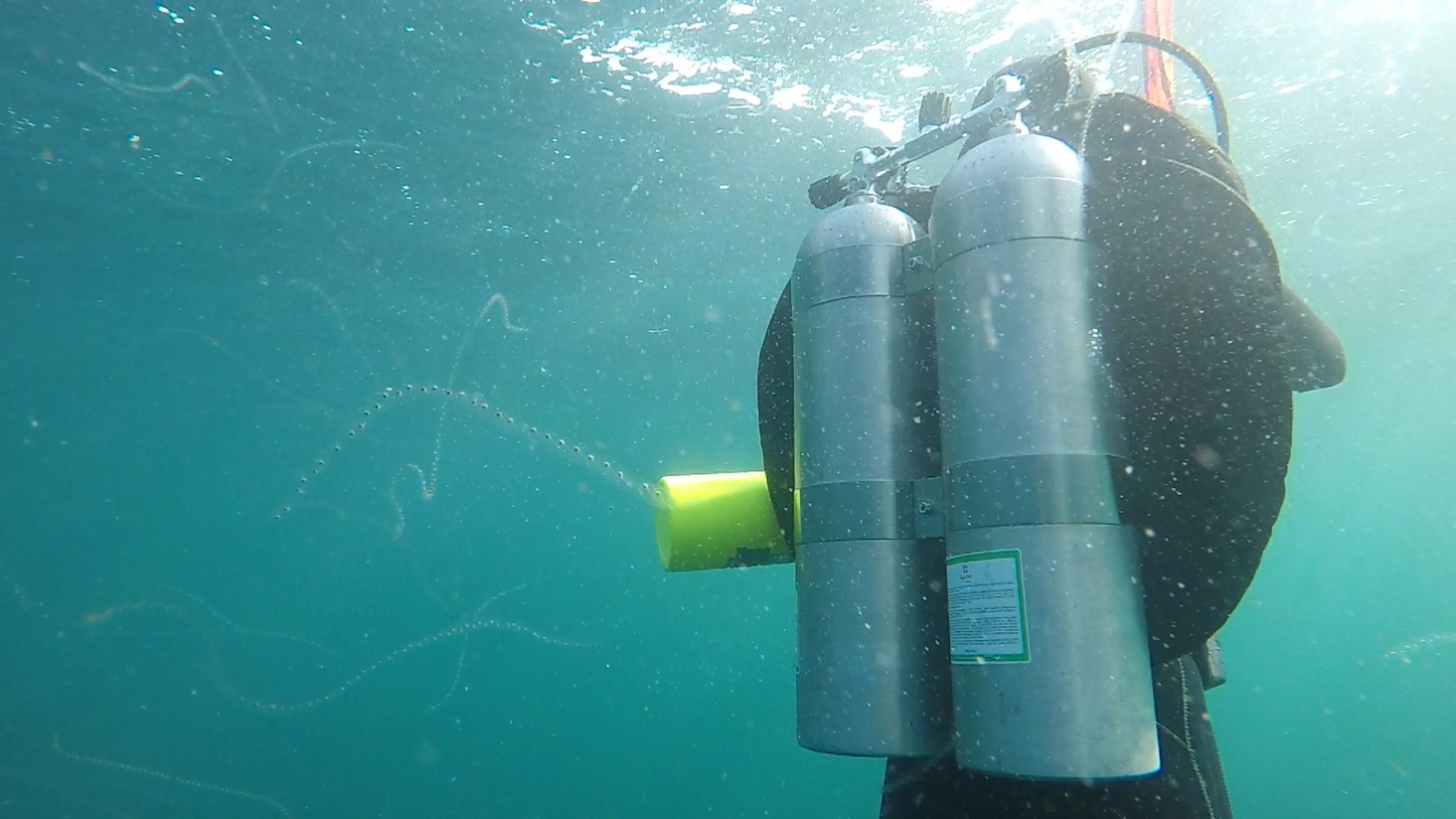
In technical diving, a diverse range of scuba gear is employed, contingent upon the environment, dive type, and prevailing conditions. Your choice of whether to dive with a sidemount or twinset backmount configuration hinges on these factors. As a sidemount diver, you enjoy an assortment of methods and setups for attaching cylinders, donning harnesses, and even tailoring your arrangement to your preferences.
For instance, in the context of cave diving, a low-profile setup is essential. However, in technical sidemount diving, a greater number of bolt snaps might be used for attaching equipment and cylinders, and the dive profile might not be the primary concern.
Mix Gases
Technical diving can be done using air as a breathing gas, but other breathing gas mixtures are commonly used to manage specific problems. Some additional knowledge is required to understand the effects of these gases on the body during a dive and additional skills are needed to safely manage their use.
In technical diving, the incorporation of nitrox and pure oxygen for accelerated decompression, as well as the introduction of helium to the breathing mixture, serves to mitigate the impacts of gas narcosis and oxygen toxicity.